
Capydoku
Tripledot Studios LimitedStrategy
3.48.00 Reviews
- Version
- 1.01.01
- Installs
- 10.00K
- Age Rating
- Everyone
Screenshots
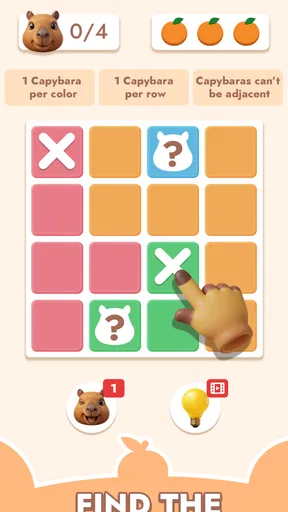
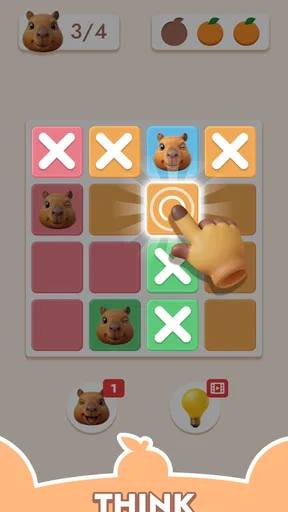
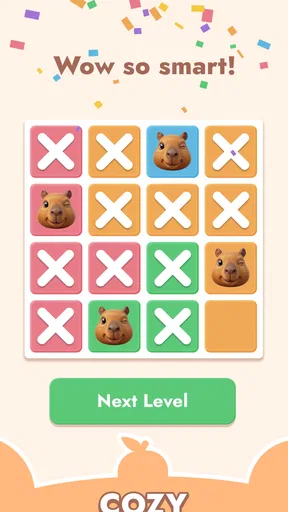
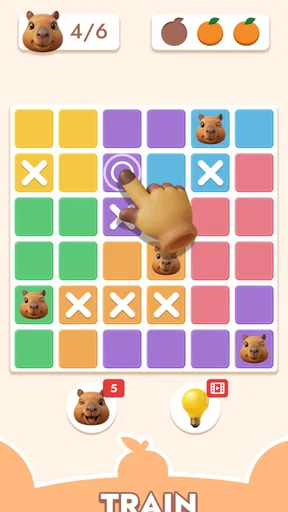
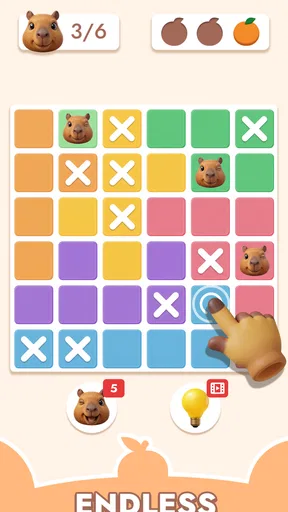

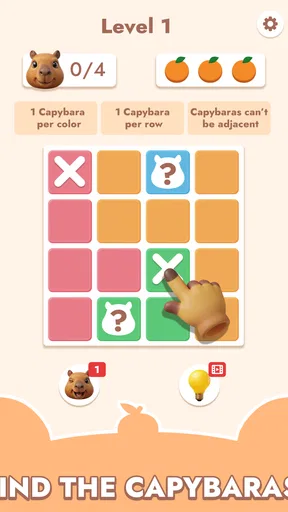
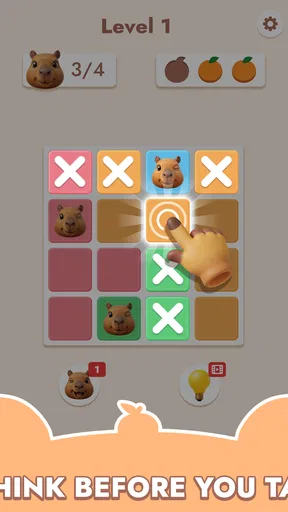
Our Review of Capydoku
 Analysis by Appyee
I went into Capydoku expecting a gentle number puzzle, and that is exactly where it feels most comfortable. It is a free strategy game from Tripledot Studios Limited built around sudoku-style solving with a playful search for hidden capybaras. That combination gives ordinary logic practice a softer personality: you are not only completing a grid, but also paying attention to the little discoveries tucked into the experience.
My first impression was that this is designed for short, low-pressure sessions rather than intense competition. The cozy presentation makes it easy to open when I have a few quiet minutes, while the sudoku foundation gives the game enough structure to hold my attention. If you enjoy number puzzles but find traditional sudoku apps too severe or visually plain, this is an appealing change of mood.
The game is listed for Everyone and is free to download, which makes it approachable for families and casual players. It currently has a 3.4 average from around thirty ratings and has passed ten thousand installs. Those numbers suggest a small, still-forming audience rather than a mature puzzle community, so I would treat it as a focused personal game instead of expecting a large social ecosystem around it.
How the cozy puzzle loop feels in everyday use
The central appeal is the contrast between familiar deduction and the capybara theme. Sudoku usually asks me to think in terms of rows, columns, and boxes; Capydoku adds a reason to look beyond the bare mechanics. The hidden-cap ybara idea gives the solving session a second layer of attention, making the board feel more like a small scene to explore than a worksheet.
That matters during ordinary use. I can imagine opening it while waiting for an appointment, taking a short break between tasks, or winding down before sleep. A puzzle like this does not demand the same commitment as a strategy game with a campaign, resource system, or long match. I can stop after a brief session without feeling that I have abandoned a larger plan.
At the same time, the sudoku structure keeps it from becoming purely decorative. The cozy theme may attract me initially, but the logic is what determines whether I return. I have to slow down, compare possibilities, and avoid placing a number simply because it feels likely. The best moments come when a small deduction unlocks several spaces and the board suddenly becomes much clearer.
The hidden-cap ybara element works best as a reward for careful observation, not as a replacement for good puzzle design. Players who want a calm visual wrapper around familiar logic will understand the appeal quickly. Players who want a deep, highly competitive strategy game may find the presentation more memorable than the strategic range.
A practical way to approach each board
I found it useful to separate solving from searching. First, I would scan the grid for obvious placements and note the numbers that are already constrained by their row, column, or box. Only after making progress would I shift attention to the hidden discovery aspect. Trying to do both at full intensity from the start can make a simple board feel busier than it needs to be.
Another helpful habit is to treat uncertain spaces as questions rather than guesses. If two numbers could fit, I would keep both possibilities in mind and move to an area with stronger evidence. This is especially useful for a cozy game because it preserves the relaxed tone; a careless guess can turn a short break into a frustrating restart or correction exercise.
For a quick session, I would aim to make one clean chain of deductions rather than forcing completion. That makes the game suitable for interrupted routines. If a call, commute, or household task pulls me away, I can return with a clearer memory of the logic instead of trying to remember a complicated long-term strategy.
Who will enjoy it most
Capydoku is a natural fit for people who already like sudoku but want something friendlier and less austere. It also suits players who are curious about number puzzles but feel intimidated by apps that emphasize speed, rankings, or advanced difficulty. The capybara theme gives the format a welcoming entry point without changing the basic satisfaction of solving a grid.
I would also recommend it to someone looking for a screen activity that feels mentally active without becoming emotionally demanding. It can occupy the hands and mind during a quiet pause, yet it does not require the kind of uninterrupted attention expected by a story-driven game or a competitive match.
Families may find the Everyone rating reassuring, although the actual fit will still depend on a player’s comfort with sudoku logic. Younger players who enjoy the theme may need help understanding deduction rather than guessing. Older players who already solve advanced puzzles may appreciate the atmosphere but could want more complexity than this compact concept provides.
Who should choose another kind of game
I would skip it if my main goal were fast action, a rich narrative, or a large strategic system with many interacting decisions. The game’s identity is built around calm puzzle solving and discovery, so it is not trying to compete with tactical battles, city builders, card strategy, or expansive board-game adaptations.
It may also be a weaker choice for a dedicated sudoku player who wants extensive control over difficulty, detailed statistics, competitive timing, or a broad training toolkit. A traditional sudoku specialist app is likely to be better when the puzzle itself is the entire priority. Capydoku makes more sense when the surrounding mood and hidden-search idea are part of the reason to play.
The modest rating is worth keeping in mind without treating it as a final verdict. With only a small number of ratings and reviews, one unhappy experience can influence the average noticeably. I would use that score as a signal to keep expectations measured: this is an early, focused release with a charming premise, not yet an established benchmark for the category.
What the current version tells me
The current version is 1.01.01, and the game was released on July 3, 2026. That places the product in an early stage of its life, so I see the present build as a starting point rather than a finished statement of everything the game could become. The version number indicates a small revision beyond the initial release, but I would not read more into it than that.
For existing users, the important effect is continuity: the game remains recognizable as a cozy sudoku-style experience while the early version settles into the hands of players. Anyone who already enjoys the basic loop should be able to judge it on its current feel instead of waiting for a hypothetical transformation. New users, meanwhile, should approach it as a compact game whose future direction may become clearer as more people play it.
The minimum requirement of Android 6.0 makes it accessible to a broad range of older Android devices. That is useful for a lightweight puzzle audience, particularly for people who do not replace their phone frequently. I would still pay attention to how comfortably the grid displays on a smaller or older screen, because number puzzles depend on clear spacing and easy tapping more than many other genres do.
Tripledot Studios Limited is the developer behind the game, and the release’s early footprint suggests a product still building recognition. Around ten thousand installs is enough to show that players are finding it, but it does not imply a huge community, a deep content library, or a long record of updates. I would install it for the present puzzle experience, not because of assumptions about future support.
Where it differs from ordinary sudoku apps
The most obvious alternative is a conventional sudoku app that removes everything except the grid. That kind of app can be excellent when I want precise difficulty selection, rapid repetition, or a clean training environment. Capydoku offers a different reason to stay: the puzzle is wrapped in a softer, more playful search that makes the session feel less like an exercise book.
That trade-off is important. A pure sudoku tool is usually easier to evaluate by its solving controls and puzzle variety. Capydoku has to succeed as an atmosphere as well as a logic game. If the hidden capybaras make me look at the board with fresh curiosity, the extra layer earns its place. If I only want to improve solving speed, the decorative concept may feel like an interruption.
Compared with broader strategy games, Capydoku is much less demanding. There is no need to plan a campaign, manage a growing collection, or learn a complicated set of systems before I can enjoy a session. That simplicity is a strength for casual play, but it also limits the sense of progression that keeps long-term strategy fans invested.
Compared with puzzle games based on matching, physics, or wordplay, the experience is more deliberate. I cannot rely on reflexes or rapid pattern tapping. The satisfaction comes from eliminating possibilities and noticing relationships. That makes it a good fit for a quiet mind-set, but not for moments when I want immediate stimulation.
Small techniques that make the experience better
One useful workflow is to scan by unit rather than by the whole board. I would choose a row, column, or box with many filled spaces, identify its missing numbers, and then check where each candidate can legally go. This reduces visual overload and turns the search for the hidden capybara into a separate, more enjoyable layer instead of mixing every task together.
A second technique is to use pauses strategically. If I reach a point where every empty space seems equally uncertain, I would stop tapping and inspect the relationship between neighboring boxes. Sudoku progress often comes from a number that is restricted in one area even when it is not immediately obvious in another. In a short-session game, taking that pause is more effective than making speculative moves.
A third trade-off is speed versus accuracy. I would not rush simply because the board looks approachable. A fast incorrect placement can damage the calm rhythm and make the rest of the puzzle harder to read. The game is better enjoyed as a small concentration ritual: solve what is certain, preserve what is uncertain, and let the hidden discovery reward attention.
There is also a useful device-related consideration. Since the game requires Android 6.0 or later, it can reach older phones, but puzzle usability depends on the display rather than raw performance alone. On a compact screen, I would play with the phone held steadily and avoid trying to solve while walking or multitasking. Clear visual separation between cells is more valuable here than having a powerful handset.
What still feels unresolved
The early release status leaves me wanting a clearer sense of long-term depth. A cozy theme can make the first sessions pleasant, but repeat play eventually depends on whether the puzzles continue to offer meaningful variation and whether the discovery element remains satisfying. I would be cautious about recommending it as someone’s only strategy game until I had seen how well the loop holds up over extended use.
The small audience also affects how I frame the purchase decision. Because the game is free, the risk is mainly time rather than money, which makes trying it easy. Still, free access does not automatically guarantee that it will match every player’s preferred style. Someone who wants a robust sudoku laboratory should start with a specialist alternative; someone who wants a gentle themed puzzle has a stronger reason to try this one.
The rating of 3.4 is neither a reason to dismiss the game nor a reason to assume it is polished in every area. I would read it alongside the limited review volume and the early version. In practical terms, that means I would give the game a fair trial, notice how comfortable the controls feel on my device, and decide based on whether the cozy presentation genuinely improves my solving sessions.
I would also avoid expecting the game to teach sudoku from the ground up in the same way a dedicated learning app might. Its appeal is the act of playing, not necessarily a structured course in advanced solving. Beginners can enjoy it, but they may need to learn basic rules separately or develop their own method through practice.
What I would watch as the game develops
For future versions, I would be most interested in how the developer expands the relationship between the grid and the hidden capybaras. The strongest direction would be one that adds variety without making the board confusing. New layers should support observation and deduction rather than turning a calm puzzle into a cluttered collection of distractions.
I would also watch for signs of broader puzzle depth. More meaningful differences between sessions, better support for both beginners and experienced solvers, and a smoother way to return to an unfinished board would all matter to me. These are the kinds of improvements that could turn a pleasant novelty into a dependable daily game, without changing its gentle identity.
Existing players should judge updates by whether they improve the actual rhythm of solving rather than by version numbers alone. A revision can be valuable even when it is small if it makes the board easier to read or the discovery moments more satisfying. Conversely, extra presentation would not help much if it made the logic harder to follow.
New users can install the current build with realistic expectations: it is a free, early-stage strategy puzzle centered on sudoku-style reasoning and capybara discovery. I would begin with short sessions, learn how the board communicates its clues, and decide after several puzzles whether the theme adds something meaningful to the routine.
My recommendation after spending time with it
I like Capydoku most when I treat it as a quiet companion rather than a complete strategy hobby. It gives familiar logic puzzles a distinctive emotional tone, and the hidden-cap ybara idea makes careful observation feel more playful. The free price and Everyone rating lower the barrier to trying it, while Android 6.0 support keeps it available to many older devices.
My recommendation is therefore specific. If you want a relaxing number game with a friendly identity, I think it is worth installing and testing during a few short breaks. If you want advanced sudoku controls, competitive pressure, a substantial progression system, or a large established community, I would choose a more specialized or more mature alternative.
The current version feels like an early foundation rather than the final word on the concept. That is not a flaw by itself; it simply changes what I expect. I would return for the calm solving and the small discoveries, while keeping an eye on whether future development adds lasting depth. For the right player, Capydoku is a charming way to make familiar logic feel less formal and more inviting.
Verdict
Strengths of Capydoku
- Simple rules make it easy to learn and start playing quickly.
- Short puzzle sessions fit well into commutes or quick breaks.
- Progressive challenges can keep regular players engaged.
- Minimal gameplay makes it suitable for casual puzzle fans.
- Offline play is convenient when no internet connection is available.
Limitations of Capydoku
- The gameplay may feel repetitive after extended sessions.
- Limited variety can reduce its appeal for experienced puzzle players.
- Some puzzles may become frustrating without useful solving hints.
- Players seeking competitive features may miss leaderboards or multiplayer.
- Small screens can make detailed puzzle elements harder to distinguish.
Other Releases by Tripledot Studios Limited
View All
Woodoku - Wood Block Puzzle
Puzzle4.2

Get Color - Water Sort Puzzle
Puzzle4.8


Nut Sort: Color Sorting Game
Puzzle4.8
Similar Picks in This Category
View All
Clash of Clans
Supercell4.5

Plants vs. Zombies™
ELECTRONIC ARTS3.7

Lords Mobile: Kingdom Wars
IGG.COM4.5

Clash Royale
Supercell4.4

State.io — Conquer the World
CASUAL AZUR GAMES4.1

Car Driving School : Car Games
Spark Game Studios3.9
Frequently Asked Questions
What is Capydoku?
Capydoku is a Sudoku-style puzzle game built around a capybara-themed presentation. It keeps the familiar logic of filling a grid without repeating numbers, while adding a more relaxed visual style and game atmosphere. It is intended for players who enjoy brain-training puzzles, short sessions, and gradually increasing challenges rather than fast action or competitive gameplay.
How do you play Capydoku?
Gameplay follows the basic rules of Sudoku: place the correct numbers in empty cells so that each number appears only once in every row, column, and designated section. You solve puzzles by studying the clues already provided and logically eliminating possibilities. The interface is generally designed for touch controls, making it easy to select a cell, choose a number, and correct mistakes while playing.
Is Capydoku suitable for beginners?
Yes, Capydoku can be suitable for beginners, especially if they are new to Sudoku or want a gentler introduction to number puzzles. New players should begin with the easiest available difficulty and take time to understand the grid rules. More experienced Sudoku fans may prefer harder levels, where solving requires deeper deduction and careful planning rather than simple trial and error.
Does Capydoku work without an internet connection?
Capydoku may be playable offline for its core puzzle experience, which is useful when travelling or when you do not have reliable mobile data. However, features such as advertisements, analytics, updates, cloud-related services, or optional purchases may require an internet connection. It is best to launch the game once while online and check which functions remain available after switching to offline mode.
Is Capydoku free to download, and does it include ads or in-app purchases?
The download model and monetization can depend on the version available for your Android or iOS device. Capydoku may be offered as a free game supported by advertisements, with optional purchases or extra features available inside the app. Before installing, review the store listing for the current price, advertising information, and purchase details, particularly if children will be using the device.
Play our best games!


